
Pickleball vs Tennis: What Transfers and What Will Sabotage You
Quick answer: Your footwork, hand-eye and volley touch transfer beautifully. Your serve, your topspin swing, your baseline instinct and your grip pressure will all cost you points until you unlearn them.
Tennis players tend to arrive at pickleball assuming it is tennis, smaller. That assumption loses to a 65-year-old with a soft dink. Here is the honest translation.
The court and gear, side by side
| Pickleball | Tennis | |
|---|---|---|
| Court size | 20 × 44 ft | 27 × 78 ft (singles) |
| Net height (center) | ~34 in | 36 in |
| Implement | Solid paddle, no strings | Strung racquet |
| Ball | Perforated plastic, low bounce | Pressurized felt, high bounce |
| Serve | Underhand, below the waist | Overhead, unrestricted |
| Net zone | 7-ft non-volley zone (kitchen) | No equivalent |
What transfers (and gives you a real edge)
- Split-step footwork and court coverage — you already move better than most rec players.
- Volley hands — net play is where pickleball is won, and you have already spent years there.
- Anticipation — reading body position and racquet face translates directly.
- Doubles positioning instincts — moving as a pair, covering the middle.
The four habits that will sabotage you
1. The big swing. Pickleball strokes are compact and come from the shoulder, not a full backswing. Long swings on a plastic ball send it long, every time.
2. Chasing topspin. A paddle has no strings and the ball has holes — you can generate spin, but nothing close to what you are used to. Control beats spin here.
3. Living at the baseline. In tennis the baseline is home. In pickleball it is a losing position. The kitchen line is where you want to be, and the two-bounce rule is designed to get you there.
4. Death grip. Tight grip kills the soft dink and the reset — the two shots that decide rallies. Loosen up.
Do you need a special paddle to switch?
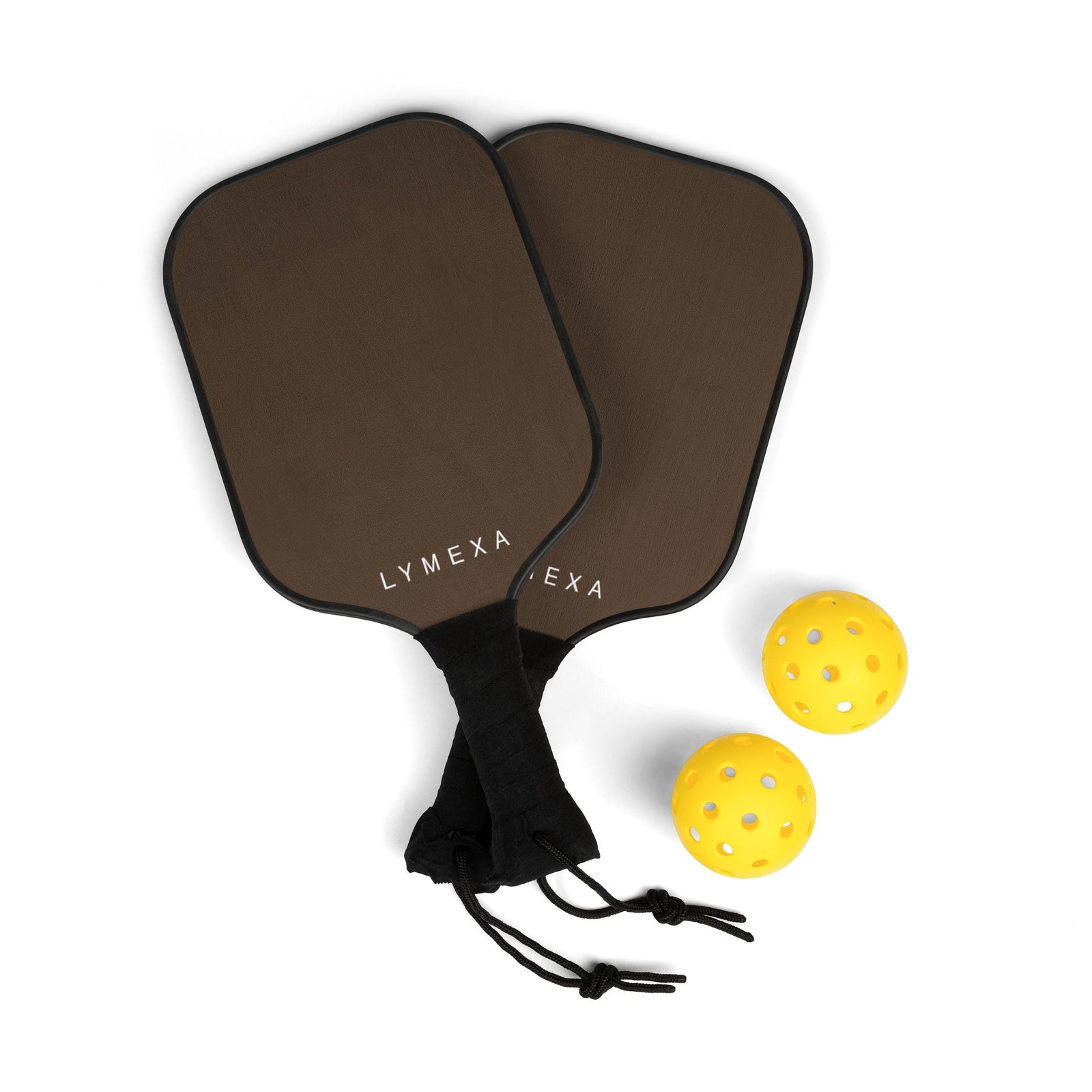
No. Start with anything reasonable and find out whether you like the game first — tennis players usually adapt within a few sessions. If you are buying for you and a partner, a complete set is the cheaper path (our starter-set comparison lays out the options, and Lymexa's Court Set is $59 for two paddles and two balls). Once you know your playstyle, our paddle guide covers weight, face material and grip sizing for the upgrade.
One warning from experience: pickleball's stop-start pivots load your calves, feet and lower back differently than tennis does, and the soreness usually shows up on day two. Ten minutes of post-game mobility handles most of it.
Frequently asked questions
Is pickleball easier than tennis?
It is easier to start — smaller court, slower ball, underhand serve, no strings to master. It is not easier to master; the soft game at the kitchen line takes real touch.
Do tennis skills transfer to pickleball?
Footwork, volleys, anticipation and doubles positioning transfer well. The overhead serve, big topspin groundstrokes and baseline-first instinct all have to be unlearned.
Why do tennis players hit pickleballs long?
Because tennis strokes use a full backswing built for a heavy pressurized ball. A light plastic ball on a 44-foot court needs a compact, shoulder-driven stroke instead.
Ready to make the switch? Start with a Court Set. Play hard. Land soft.
Play and recover — from one place.
Shop the kit →