
Ball Hardness in Play: What Every Pickleball Player Needs
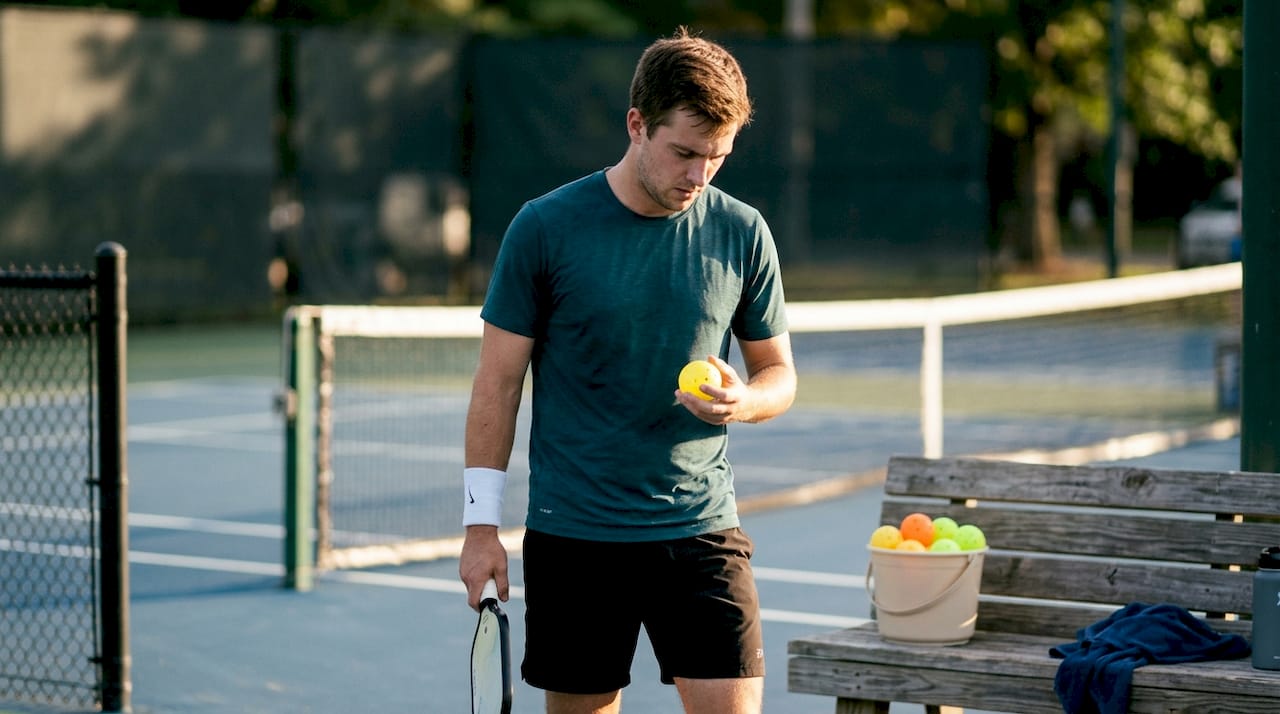
Ball hardness is defined as the measured firmness of a ball’s surface and internal material, and it directly controls energy transfer, dwell time, spin generation, and player feedback on every shot. The role of ball hardness in play is not a minor equipment detail. It shapes how your paddle connects with the ball, how much control you have in the kitchen, and how your arm feels after two hours of drilling. Governing bodies and equipment manufacturers measure hardness using the Shore A or Asker C durometer scales. Lymexa designs its paddle lineup with these material interactions in mind, because the ball and paddle work as a system, not in isolation.
How does ball hardness affect control, spin, and shot feel?
Ball hardness is a primary determinant of energy transfer and contact feel, and it controls deformation and spin during every millisecond of paddle contact. That single fact explains why two balls that look identical can feel completely different in your hand.
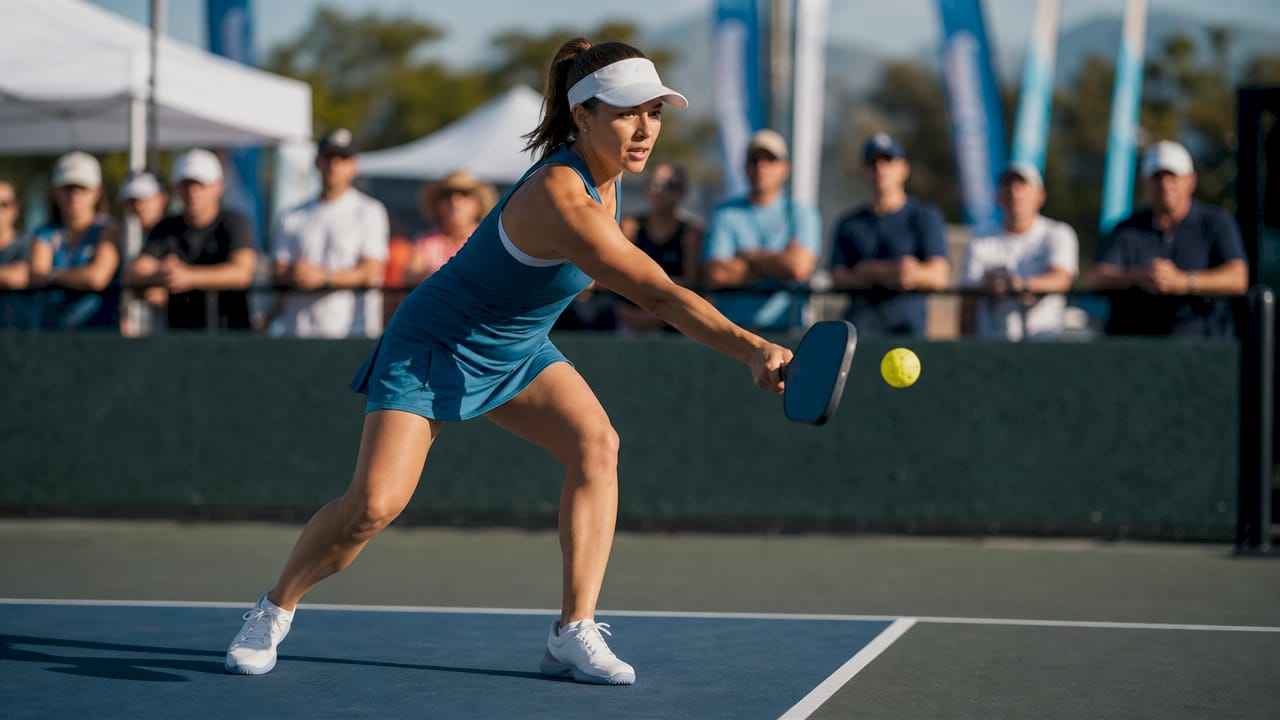
When a ball hits your paddle, it compresses slightly and then rebounds. The degree of that compression is what hardness governs. Foam compression accounts for 40–60% of energy absorption during impact. Harder materials transfer more force back through the paddle face, while softer materials dissipate more energy as heat.
Here is what that means in practical terms for pickleball:
- Dwell time: Softer balls stay in contact with the paddle face slightly longer. That extra contact time gives you more opportunity to redirect the ball, which is why soft balls feel more “connected” during dinks and drops.
- Spin generation: Lower hardness increases friction on contact, creating a stickier feel that improves spin transfer. Surfaces below Shore A 50 enhance control, while firmer surfaces in the 55–65 Shore A range deliver durability and power.
- Energy return: Harder balls rebound faster and more predictably. Power players who rely on flat drives benefit from this consistent energy return.
- Shot feel: Softer balls absorb micro-vibrations that travel up the paddle handle. This makes them feel gentler on the arm, especially during extended play.
Pro Tip: If you are working on your third-shot drop, practice with a slightly softer ball. The increased dwell time will give you clearer feedback on whether your paddle face angle is correct at contact.
The trade-off is real. Softer balls give you more touch and spin, but they sacrifice the crisp, predictable rebound that power-oriented players need for consistent drives and overhead smashes.
What are the trade-offs between soft and hard pickleballs in durability and injury risk?
Softer balls provide superior spin and control due to increased friction and dwell time, but they have a shorter lifespan due to material degradation on abrasive court surfaces. This is the central trade-off every player faces when selecting equipment.
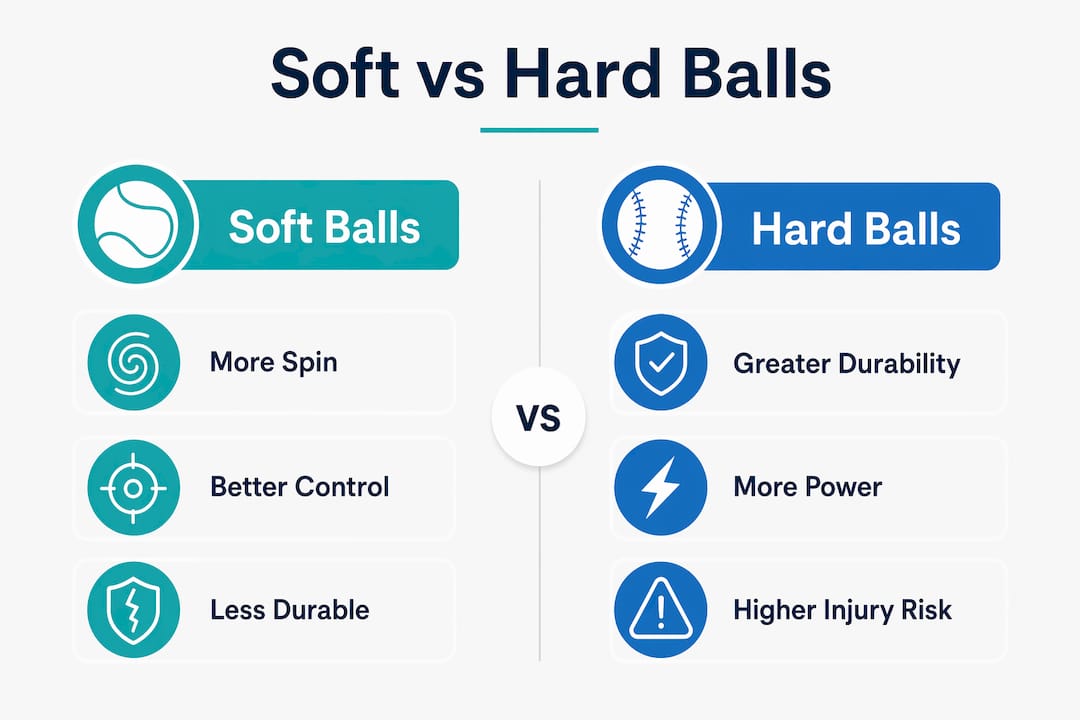
The durability gap is significant. Softer materials compress more on each impact and against rough concrete or asphalt surfaces. That repeated compression wears down the ball’s surface faster, leading to uneven hardness across the ball’s shell. Once a ball develops inconsistent hardness, its flight path becomes unpredictable.
The injury picture is equally important. Consider these key points:
- Overly hard balls increase impact shock. When a ball is too firm, it transfers more force through the paddle and into your wrist, elbow, and shoulder on each shot. Repetitive strain injuries, including lateral epicondylitis (tennis elbow), are directly linked to high-impact shock loads.
- Overly soft balls fail rebound tests. Balls below 58 Asker C typically fail rebound standards, meaning they do not bounce consistently. Inconsistent bounce forces your body to make constant micro-adjustments, which increases neuromuscular fatigue.
- Inconsistent hardness between sessions causes technical regression. Balls with inconsistent hardness between training and match play contribute to neuromuscular micro-injuries and altered player mechanics. Impact durations last only 8–15 milliseconds, so even slight hardness variations change the physical feedback your nervous system expects.
- Balls above 75 Asker C risk brittleness. Balls above 75 Asker C risk brittleness and micro-cracks, which can cause sudden failure mid-rally and create unpredictable flight behavior.
The practical takeaway is that hardness has a functional window. Too soft and you lose durability and consistent bounce. Too hard and you increase injury risk and ball failure. Staying within the tested hardness range is not just about performance. It is about protecting your body over a long playing career.
How to choose the optimal ball hardness for your playing style and conditions
No universal ideal hardness exists. Optimal ball hardness depends on context, including your playing style, the court surface, and the conditions on the day you play. Understanding how these factors interact lets you make a deliberate choice rather than grabbing whatever ball is in the bag.
Match your hardness to your playing style:
- Control players and dink specialists benefit from softer balls. The increased friction and dwell time translate directly into better touch in the kitchen line and more reliable spin on drop shots.
- Power players and bangers perform better with harder balls. The consistent energy return produces faster, flatter drives that stay true to the intended line.
- All-around players should test balls in the mid-range of the Shore A scale and note how their third-shot drop and drive feel on the same day.
Factor in your environment:
Temperature changes ball hardness noticeably. Cold air makes polymer materials stiffer, pushing a ball toward the harder end of its range. Hot conditions soften the material. Harder balls perform better on slow or dry surfaces, while softer balls suit high-speed scenarios where precision and spin matter most.
Consistency between training and match play is non-negotiable. Using one hardness level in practice and a different one in competition forces your nervous system to recalibrate on match day. That recalibration costs you precision exactly when precision matters most.
Pro Tip: Press your thumb firmly against the ball’s surface and hold for two seconds. A ball that shows a visible indent and recovers slowly is on the softer end. A ball that shows almost no indent is on the harder end. This quick test takes five seconds and tells you more than the packaging label.
When reading manufacturer specs, look for durometer ratings rather than vague descriptors like “firm” or “soft.” A stated Shore A or Asker C value gives you a repeatable reference point across different brands and production runs.
What is the material science behind ball hardness?
Internal pressure and ball hardness are separate properties, and pressure gauges cannot detect hardness variation. This is the most common misconception among players who assume that a properly inflated ball is a properly performing ball. Two balls with the same internal pressure but different material hardness behave noticeably differently to any experienced player.
Hardness is measured by a durometer, a device that presses a standardized probe into the ball’s surface and records resistance. The Asker C scale is common for softer foam materials, while Shore A applies to harder polymers. Neither scale measures pressure. They measure how much the surface material resists deformation.
| Hardness range | Scale | Typical behavior |
|---|---|---|
| Below 50 Shore A | Shore A | High friction, high spin, fast wear |
| 55–65 Shore A | Shore A | Balanced control and durability |
| Above 75 Asker C | Asker C | Brittle risk, micro-crack potential |
| Below 58 Asker C | Asker C | Fails standard rebound tests |
Material aging adds another layer of complexity. Thermal fatigue from repeated impacts makes ball materials brittle, creating micro-cracks and altering performance even when the ball looks visually intact. A ball that passed a hardness test when new may behave like a harder, less forgiving ball after 20 hours of play. That shift affects spin transfer and touch, which matters most in competitive play.
Manufacturing variances also matter. Even within a single production batch, slight differences in material mixing or curing time can shift a ball’s hardness by several points on the durometer scale. Players who notice that one ball in a fresh pack “feels different” are not imagining it. They are detecting a real variance that a durometer would confirm.
Key Takeaways
Ball hardness directly controls energy transfer, spin, dwell time, and injury risk in pickleball, making it one of the most consequential equipment variables a player can manage.
| Point | Details |
|---|---|
| Hardness governs contact feel | Shore A and Asker C scales measure surface firmness, not pressure, and determine dwell time and spin. |
| Softer balls improve touch but wear faster | Below Shore A 50, friction and spin increase, but abrasive courts degrade the material quickly. |
| Hardness window protects your body | Balls below 58 Asker C fail rebound tests; balls above 75 Asker C risk brittleness and impact shock. |
| Pressure and hardness are independent | A properly inflated ball can still have the wrong hardness for your playing style or conditions. |
| Match hardness to context | Control players benefit from softer balls; power players perform better with firmer ones; temperature shifts hardness on the day. |
Why players underestimate ball hardness (and pay for it later)
Players obsess over paddle weight, grip size, and surface texture. Ball hardness gets almost no attention until something goes wrong. I have watched technically sound players struggle through a slump for weeks, adjusting their swing mechanics, changing their grip, even switching paddles, when the actual problem was that they had moved from a softer training ball to a harder match ball without realizing it.
The neuromuscular feedback loop is faster than conscious thought. Your body calibrates to the ball it trains with. When that calibration gets disrupted by a hardness change, your drops land long, your dinks pop up, and your drives feel dead. None of those symptoms point obviously to the ball. They all look like technique errors.
The fix is simple but requires discipline. Check your balls before every session. Use the thumb-press test or invest in a basic durometer. Retire balls that have logged significant court time, even if they look fine. Thermal fatigue alters performance invisibly, and a visually intact ball can be playing significantly harder than it did when new.
Balancing durability and touch is a real skill. Competitive players should keep a dedicated set of match balls and a separate set for drilling. That separation preserves the hardness consistency your nervous system depends on, and it extends the life of your best balls.
— extradom
Lymexa gear built for the ball you play with
Every paddle in the Lymexa lineup is designed with ball-to-paddle interaction in mind. The surface texture, core density, and face material all respond differently depending on the hardness of the ball you are using. Choosing the right paddle for your preferred ball hardness range is the next step after understanding the physics.

Lymexa also carries recovery gear built for players who put in real court time. Extended sessions with harder balls increase arm fatigue and joint stress. The right recovery tools help you train consistently without accumulating the kind of strain that sidelines players for weeks. Visit Lymexa’s full equipment range to find paddles and recovery gear matched to your playing style and hardness preferences.
FAQ
What does ball hardness mean in pickleball?
Ball hardness refers to the firmness of the ball’s surface material, measured by Shore A or Asker C durometer scales. It controls dwell time, spin transfer, energy return, and how the ball feels on every shot.
Does a harder pickleball give you more power?
Yes. Harder balls return more energy on impact, producing faster rebounds and flatter drives. Softer balls absorb more energy as heat, which reduces power but improves touch and spin.
How does temperature affect ball hardness?
Cold temperatures make polymer materials stiffer, pushing a ball toward the harder end of its range. Hot conditions soften the material. Players should account for this when choosing balls for outdoor play in varying weather.
Can inconsistent ball hardness cause injury?
Yes. Inconsistent hardness alters physical feedback during the 8–15 millisecond contact window, forcing neuromuscular micro-adjustments that accumulate into strain injuries over time.
How do I test a ball’s hardness without a durometer?
Press your thumb firmly into the ball’s surface for two seconds. A slow-recovering indent indicates a softer ball; almost no indent indicates a harder ball. For precise measurement, a handheld durometer gives a Shore A or Asker C reading in seconds.
Recommended
Play and recover — from one place.
Shop the kit →